Today in Edworking News we want to talk about Hakai Magazine Article
 Revolutionizing Rice Farming in Vietnam with Drones
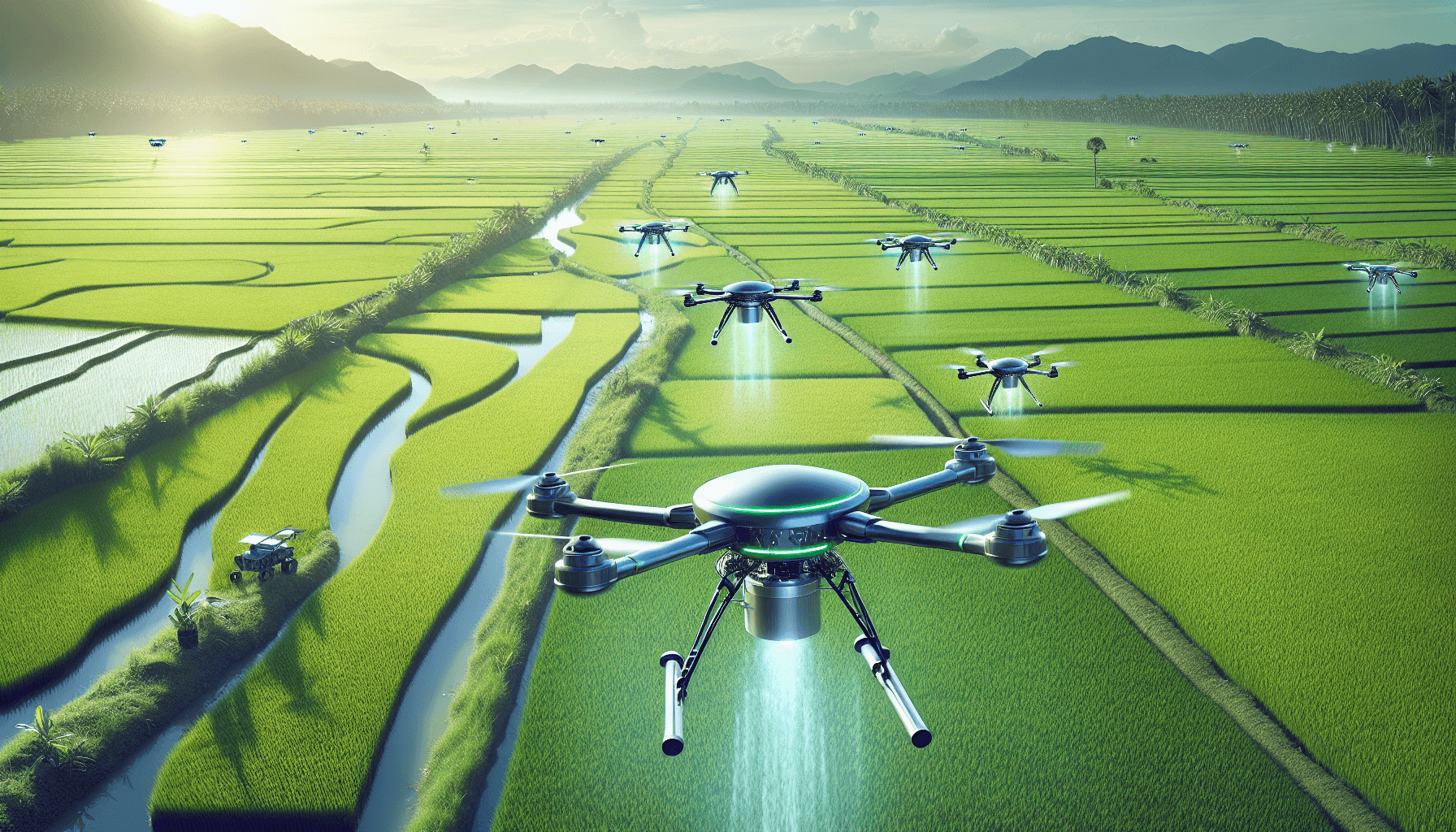
One of the most persistent images of Vietnam is that of farmers bending over rice fields, wearing conical, woven hats as they work by hand. Yet, that mental image could use a digital-age update: along the lower Mekong River, rice fields are often empty of people. Instead, drones—sometimes the size of suitcases—fly over the fields.
Globally, rice is a key staple food, and in the late 1980s, as Vietnam shifted its rice fields from commune-based public ownership to private holdings, motivating farmers to increase production, the country emerged as one of the world’s largest rice producers. Fifty percent of the nation’s rice crop is grown in the delta of the Mekong River, which drains into the South China Sea. Farmers in the region plant rice during He Thu (summer–autumn), Dong Xuan (winter–spring), and Mua (monsoon). They plow and level fields using farm machinery and then, in the absence of drones, scatter seeds by hand or plant seedlings one at a time before flooding the field. To give rice shoots a boost, they add fertilizer. And when confronted with a host of damaging diseases, such as leaf blast—caused by the fungus Pyricularia oryzae—or pests, such as weedy rice, they respond with an arsenal of pesticides.
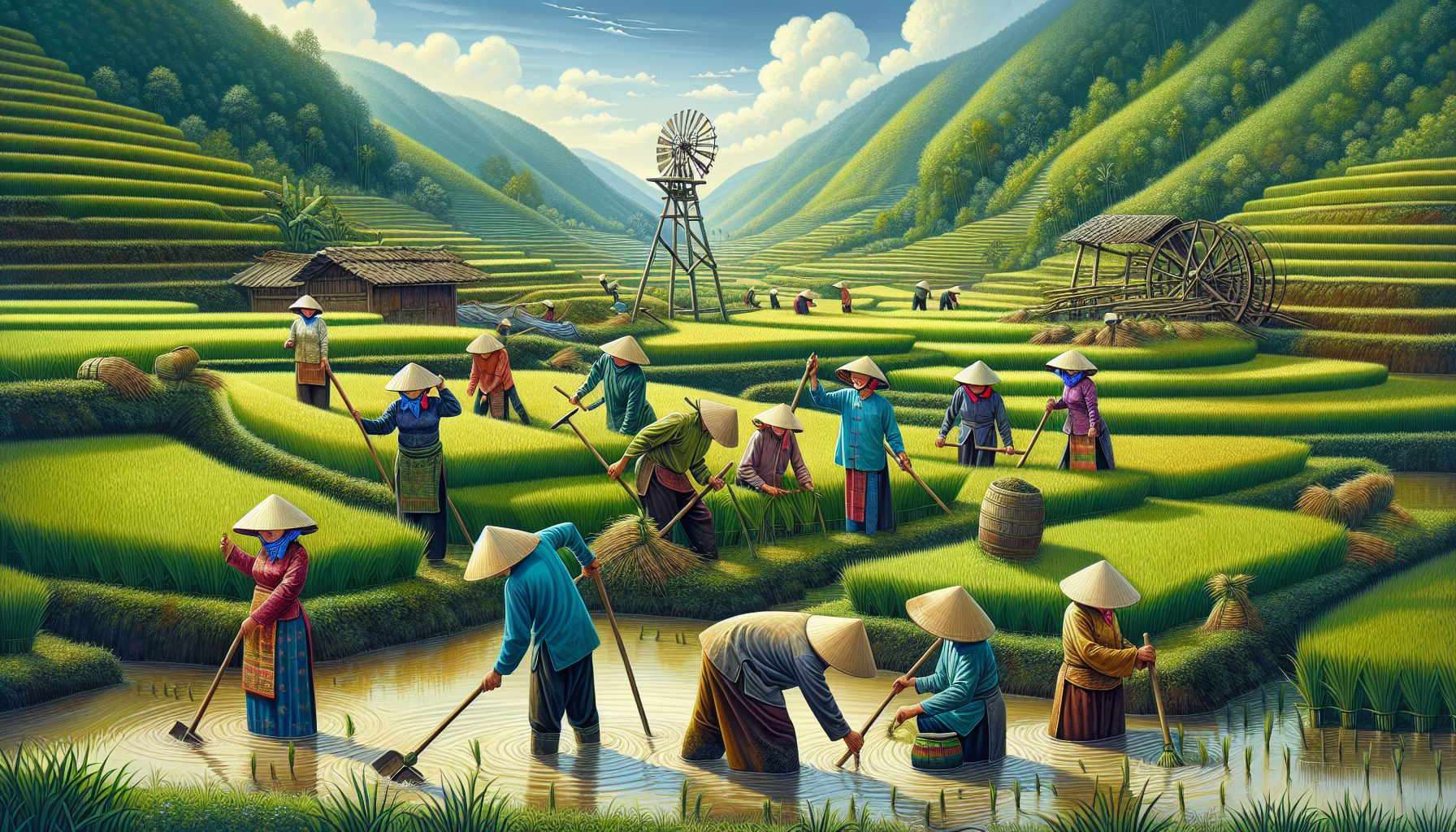
Vietnamese farmers traditionally worked rice fields by hand.
Lê Quốc Trung was born into a rice-farming family in the Tràm Chim area of the Mekong delta and understood the pervasive risk that rice diseases pose for crops. In 2021, he partnered with the Chinese agricultural technology company XAG to bring agricultural drones equipped with AI to the delta region, hoping to improve working conditions and limit the spread of rice diseases.
XAG Mekong gives farmers two options: buy a drone and operate it autonomously, or hire pilots to provide the machine and manage operations. The drones can be configured to scatter seed, spray pesticide, or spread fertilizer. The farmer or pilot first fills the drone with the right amount of material. Then, once the operator has set the parameters and mapped the field, using a mobile phone application, the machine runs automatically and returns when supplies run out.
The machines can cut the labor requirements for managing some aspects of crop production by at least half. Because drones spray or scatter the ideal concentration uniformly over a precise area, farmers require less pesticide and fertilizer than they would if applying materials by hand, says XAG engineer Long Hung. This precision in turn reduces how much of the additives end up in the soil and flush into the river and out to the sea. “Moreover, you don’t have to step into the crop and risk ruining physically the field,” he says.
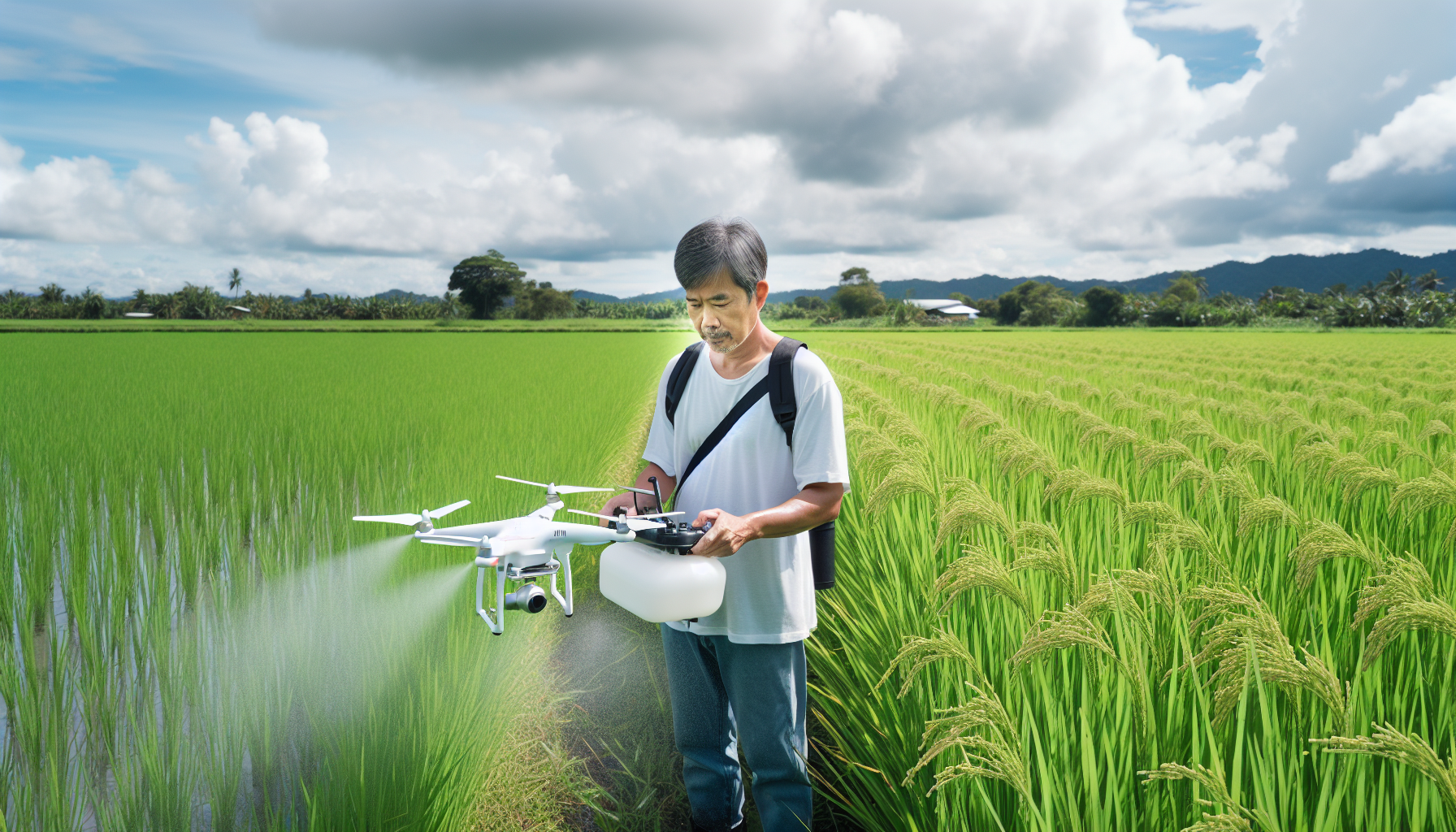
A farmer operates a drone to spray pesticides over rice fields.
Several other companies now supply agricultural drones to the area, and XAG estimates that Vietnam has as many as 4,000 in operation. “I am still surprised at how quickly the popularity of drones has grown in the area in recent years,” says Lê Quốc Trung.
Like many farmers in the region, which is still rural and rooted in tradition, Le Hue Thìn was apprehensive about drones at first: “My family has worked our land manually for generations. Before I decided to rely on new technologies, I did a lot of research …” he says. “Later, I bought two devices, thinking of them as an investment that I also made for my children.”
For 20 years, he cultivated his family’s four hectares by hand; today, he can sit at the edge of the field and fly the drone with no physical effort and no direct exposure to pesticides—some of which have been associated with diseases of the eyes, ears, nose, throat, skin, and gastrointestinal tract.
Drone use in the Mekong delta region ramped up in 2020 partly because of the COVID-19 pandemic. Lockdown gave farmers time to research buying a drone or hiring a pilot, prompted by ads on social media.
And many young people who had left home because they didn’t want to work the rice fields, finding it unrewarding and tiring, returned from cities to be close to family. When they discovered the drone-pilot profession, they saw an opportunity to use technology to engage in farming without the heavy physical strain. Nguyen Thanh Tung, 24, was unemployed before he trained as a drone pilot. Today, he offers his services to farmers. Together, they determine the most effective settings, combining their skills. “I love this job,” he says. “I’m curious to see how technology will develop.”
Another young drone convert is To Van Hoang, 28. He started farming alongside his father 10 years ago on their 30-hectare plot and incorporated drones two years ago after learning about them through social media. They’ve radically changed the way he works: Previously, it took him five days of manual labor to spray the entire farm. Now he can complete the task in just four hours using 30 percent less chemical. “I have more free time, so I can also offer spraying service to other farmers to gain extra income,” he says.
Any technologically driven shift in agriculture is bound to come with some drawbacks. A 2021 analysis in Technological Forecasting and Social Change notes that drones could shift jobs away from farm laborers and that drone crashes might injure people or damage property. Many people also find the sharp buzzing sound of a medium-sized drone annoying. In the Mekong delta region, drones may also undercut a traditional way of life and may be financially out of reach for many. On balance, though, they appear to be improving the quality of life and productivity of the rice farmers employing them.
While global demand for agricultural drones is expected to grow over the next few decades, climate change is forcing Asia to speed up the process. The Food and Agriculture Organization of the United Nations estimates that of the 815 million people who are chronically hungry, 64 percent live in Asia. Global food production will need to increase by about 50 percent in the next quarter-century to feed a projected population of nine billion. Meanwhile, the basic resources for agricultural production, such as land and water, are becoming more scarce by the day. Using drones to cut down on labor and supplies could help rice farming become more efficient, playing a role in food security.
Remember these 3 key ideas for your startup:
- Innovative Technology and Tradition: Combining cutting-edge technology with traditional methods can lead to significant improvements in productivity and work conditions, as seen in Vietnam's rice farming. Incorporate modern tools to stay competitive.
- Adapting to Changing Circumstances: The COVID-19 pandemic spurred innovation and adoption of drones in rice farming in the Mekong delta. Be open to adapting your business model quickly in response to global events and crises. For businesses looking to adapt, refer to this quick guide to strategy portfolio management.
- Efficiency and Sustainability: Drones in agriculture dramatically reduce labor and chemical use, making farming more efficient and sustainable. Similarly, startups and SMEs should focus on integrating technology to optimize resources and enhance sustainability. Learn more about defining tasks and activities in project management.
Edworking is the best and smartest decision for SMEs and startups to be more productive. Edworking is a FREE superapp of productivity that includes all you need for work powered by AI in the same superapp, connecting Task Management, Docs, Chat, Videocall, and File Management. Save money today by not paying for Slack, Trello, Dropbox, Zoom, and Notion.
For more details, see the original source.