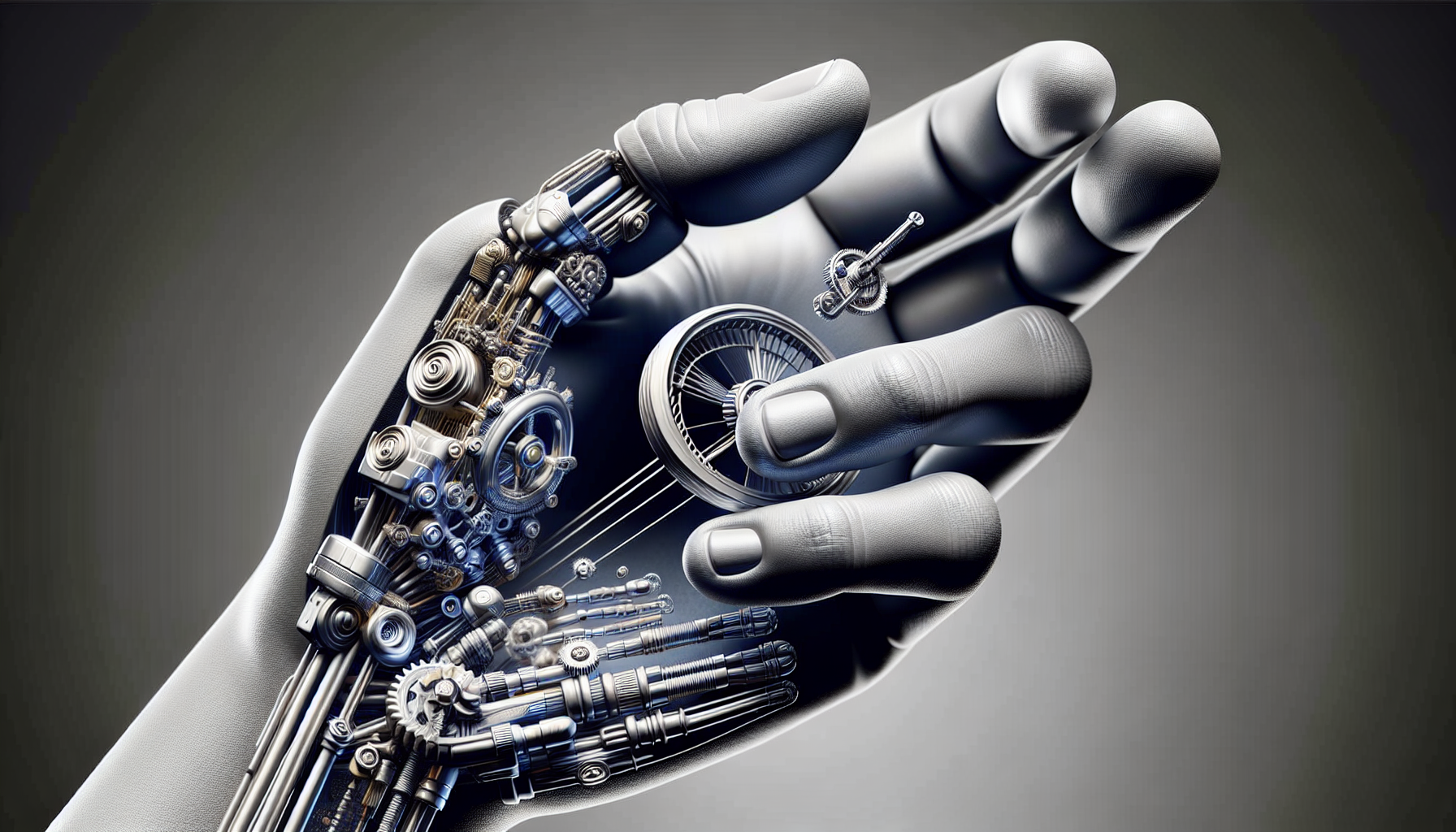
Members of the public have little trouble in learning very quickly how to use a third thumb – a controllable, prosthetic extra thumb – to pick up and manipulate objects. Cambridge researchers tested their robotic device on a diverse range of participants, which they say is essential for ensuring new technologies are inclusive and can work for everyone. An emerging area of future technology is motor augmentation – using motorised wearable devices such as exoskeletons or extra robotic body parts to advance our motor capabilities beyond current biological limitations. While such devices could improve the quality of life for healthy individuals who want to enhance their productivity, the same technologies can also provide people with disabilities new ways to interact with their environment.
Professor Tamar Makin from the Medical Research Council (MRC) Cognition and Brain Sciences Unit at the University of Cambridge said: "Technology is changing our very definition of what it means to be human, with machines increasingly becoming a part of our everyday lives, and even our minds and bodies. These technologies open up exciting new opportunities that can benefit society, but it’s vital that we consider how they can help all people equally, especially marginalised communities who are often excluded from innovation research and development. To ensure everyone will have the opportunity to participate and benefit from these exciting advances, we need to explicitly integrate and measure inclusivity during the earliest possible stages of the research and development process."
Dani Clode, a collaborator within Professor Makin’s lab, has developed the Third Thumb, an extra robotic thumb aimed at increasing the wearer’s range of movement, enhancing their grasping capability and expanding the carrying capacity of the hand. This allows the user to perform tasks that might be otherwise challenging or impossible to complete with one hand or to perform complex multi-handed tasks without having to coordinate with other people.
 How the Third Thumb Works
The Third Thumb is worn on the opposite side of the palm to the biological thumb and controlled by a pressure sensor placed under each big toe or foot. Pressure from the right toe pulls the Thumb across the hand, while the pressure exerted with the left toe pulls the Thumb up toward the fingers. The extent of the Thumb’s movement is proportional to the pressure applied, and releasing pressure moves it back to its original position.
Participants testing the Third Thumb during the Royal Society Summer Science Exhibition.
In 2022, the team had the opportunity to test the Third Thumb at the annual Royal Society Summer Science Exhibition, where members of the public of all ages were able to use the device during different tasks. The results are published today in Science Robotics.
Over the course of five days, the team tested 596 participants, ranging in age from three to 96 years old and from a wide range of demographic backgrounds. Of these, only four were unable to use the Third Thumb, either because it did not fit their hand securely, or because they were unable to control it with their feet (the pressure sensors developed specifically for the exhibition were not suitable for very lightweight children).
Task Performance
Participants were given up to a minute to familiarise themselves with the device, during which time the team explained how to perform one of two tasks. The first task involved picking up pegs from a pegboard one at a time with just the Third Thumb and placing them in a basket. Participants were asked to move as many pegs as possible in 60 seconds. 333 participants completed this task.
The second task involved using the Third Thumb together with the wearer’s biological hand to manipulate and move five or six different foam objects. The objects were of various shapes that required different manipulations to be used, increasing the dexterity of the task. Again, participants were asked to move as many objects as they could into the basket within a maximum of 60 seconds. 246 participants completed this task.
Almost everyone was able to use the device straightaway. 98% of participants were able to successfully manipulate objects using the Third Thumb during the first minute of use, with only 13 participants unable to perform the task.
Broad Inclusivity and Usability Findings
Ability levels between participants were varied, but there were no differences in performance between genders, nor did handedness change performance – despite the Thumb always being worn on the right hand. There was no definitive evidence that people who might be considered ‘good with their hands’ – for example, they were learning to play a musical instrument, or their jobs involved manual dexterity – were any better at the tasks.
Older and younger adults had a similar level of ability when using the new technology, though further investigation just within the older adults age bracket revealed a decline in performance with increasing age. The researchers say this effect could be due to the general degradation in sensorimotor and cognitive abilities that are associated with aging and may also reflect a generational relationship to technology.
Performance was generally poorer among younger children. Six out of the 13 participants that could not complete the task were below the age of 10 years old, and of those that did complete the task, the youngest children tended to perform worse compared to older children. But even older children (aged 12-16 years) struggled more than young adults.
Edworking is the best and smartest decision for SMEs and startups to be more productive. Edworking is a FREE superapp of productivity that includes all you need for work powered by AI in the same superapp, connecting Task Management, Docs, Chat, Videocall, and File Management. Save money today by not paying for Slack, Trello, Dropbox, Zoom, and Notion.
Dani Clode said: "Augmentation is about designing a new relationship with technology—creating something that extends beyond being merely a tool to becoming an extension of the body itself. Given the diversity of bodies, it's crucial that the design stage of wearable technology is as inclusive as possible. It's equally important that these devices are accessible and functional for a wide range of users. Additionally, they should be easy for people to learn and use quickly."
Co-author Lucy Dowdall, also from the MRC Cognition and Brain Science Unit, added: "If motor augmentation – and even broader human-machine interactions – are to be successful, they’ll need to integrate seamlessly with the user’s motor and cognitive abilities. We’ll need to factor in different ages, genders, weight, lifestyles, disabilities – as well as people’s cultural, financial backgrounds, and even likes or dislikes of technology. Physical testing of large and diverse groups of individuals is essential to achieve this goal."
When Technology Isn't Inclusive
There are countless examples of where a lack of inclusive design considerations has led to technological failure. For example, the Microsoft Kinect, which initially struggled to recognize users with darker skin tones, or the Apple Face ID system, which has had issues in correctly identifying users wearing masks during the COVID-19 pandemic.
The research was funded by the European Research Council, Wellcome, the Medical Research Council and Engineering and Physical Sciences Research Council.
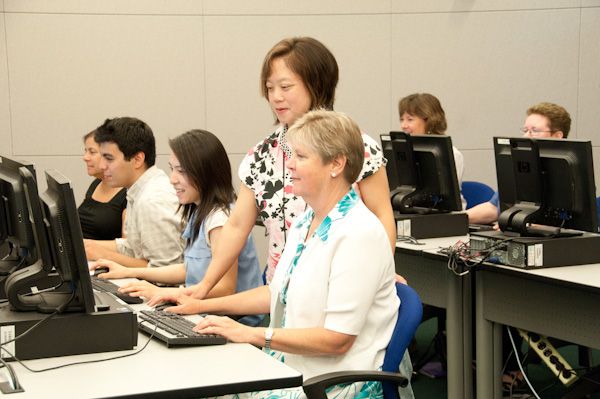
The importance of inclusiveness in technology design to ensure broad usability.
Reference: Clode, D & Dowdall, L et al. Assessing First Time Usability of a Hand Augmentation Device in a Large Sample of Diverse Users. Science Robotics; 29 May 2024; DOI: 10.1126/scirobotics.adk5183
Remember these 3 key ideas for your startup:
- Inclusivity is Essential: Innovate with inclusiveness from the beginning. Ensure that your products and services work for people of all ages, genders, abilities, and backgrounds to capture a wider audience and enhance societal impact. Ways to replicate the office in a remote work setup.
- Ease of Use: Design your technology so that it is intuitive and easy to use. Quick adaptability can lead to faster adoption rates and broader acceptance across various user demographics. Examples of effective team dynamics.
- Leverage Augmented Technology: Motor augmentation devices can revolutionize productivity. Utilize advancements in wearable tech to enhance human capabilities, making everyday tasks more efficient and accessible to everyone. The ultimate guide to choosing the right remote working platform.
By integrating inclusivity and ease of use in your product development, you significantly boost your chances for widespread adoption and market success. For more details, see the original source.