
On January 28, 2022, about an hour before dawn, the four-lane Fern Hollow Bridge in Pittsburgh, Pennsylvania, collapsed without warning. Five vehicles, including an articulating bus, fell with the bridge, and another car drove off the abutment after the collapse, not realizing the bridge was gone. Although there were no fatalities, several people in the vehicles were seriously injured.
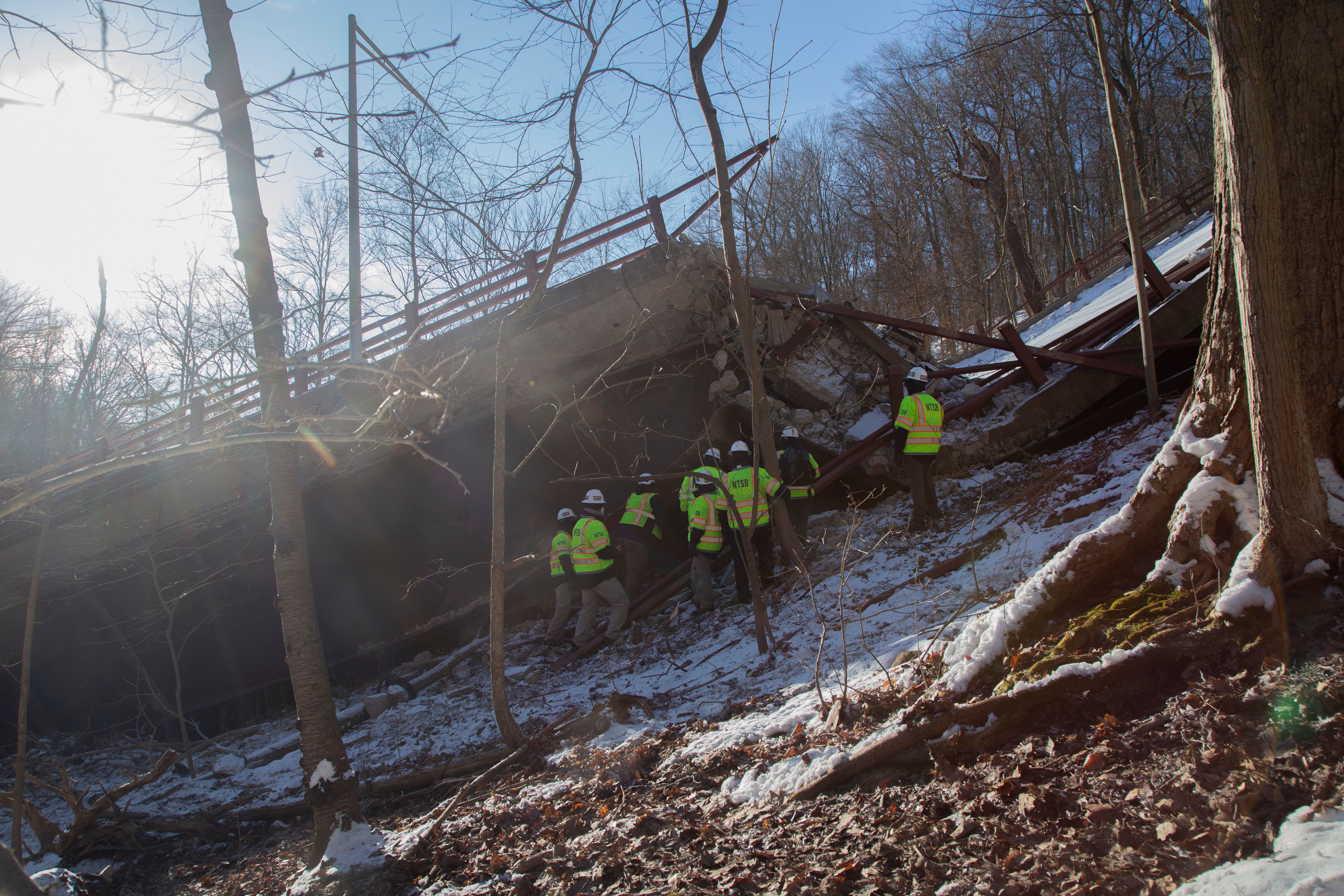
Image Description: The collapsed Fern Hollow Bridge with vehicles and emergency response teams on-site.
This bridge was listed as being in a 'poor condition' for over a decade. Anyone who walked by the supports in the park below would have had reason to question its safety, evidenced by a prophetic tweet from 2018. Despite these warnings, the bridge remained open. Initial findings had been released earlier, but the official NTSB report was delivered to the public in February this year, more than two years after the collapse and over a year after the replacement bridge was built. This report utilized advanced technology for the forensic study of structures and revealed systemic flaws in how we inspect, analyze, and prioritize repairs for bridges.
The NTSB issued recommendations to nearly every organization involved with this bridge, referencing the infamous 2018 tweet. This case is a stark example of how common sense can be overridden by budget constraints and rigid regulations, leading to potentially disastrous outcomes. The lessons here extend beyond bridge design and maintenance, highlighting how small mistakes collectively lead to monumental failures.
The bridge was opened in 1973, using a K-Frame design with continuous steel girders. It was a celebrated structure due to its aesthetic integration with the surroundings thanks to the use of weathering steel. Unlike most types of steel, weathering steel's patina can protect against further corrosion, provided it remains dry. Unfortunately, this was not the case for the Fern Hollow Bridge. Water leakage due to clogged drainage grates resulted in trapped water and debris, accelerating the corrosion of the bridge's structural elements. Between 2005 and 2021, the bridge was inspected 14 times, revealing a clear deterioration over the years.
In 2009, the failing cross-braces were temporarily reinforced with steel cables, which were never intended to be a permanent solution. The image from the 2018 tweet clearly shows these cables alongside a separated cross-brace, exemplifying the bridge's neglected condition.
The corrosion problem extended to the legs of the bridge, which also suffered significant section losses—remarked upon in numerous inspection reports. By 2019, all four legs had received the poorest possible rating for a bridge element. However, a mandated structural review was never performed.
Fracture-critical members, which are structural elements under tension and lack redundancy, are critical in bridge evaluation. Yet, the legs of the Fern Hollow Bridge were not identified as such, despite experiencing tension forces due to the K-Frame design. This oversight contributed significantly to the bridge's collapse.
In 2014, the bridge's load rating was downgraded, but engineers missed some crucial details regarding the degree of corrosion and the weight of additional paving, leading to an inaccurate assessment. Consequently, the load rating grossly overestimated the bridge’s capacity, and it should have been closed to traffic, carrying a rating that would have limited its use to no more than 3 tons per vehicle. Instead, the bridge remained open.
The NTSB used advanced forensic techniques such as 3D laser scanning and finite-element modeling to determine that the failure of the transverse tie plate on the southwest leg initiated the collapse. The City of Pittsburgh’s repeated failure to address inspection recommendations over the years played a key role in the tragedy. When the collapse occurred during bad weather, the lighter traffic and reduced presence of pedestrians likely prevented casualties.
The rapid replacement of the bridge began immediately, opting for a more conventional pre-stressed concrete design. The new bridge might not have won beauty awards but was completed quickly and was fully operational within a year following its fast-track construction schedule.
The fall of the Fern Hollow Bridge serves as an urgent reminder for infrastructure maintenance and reveals the systemic issues in current inspection and maintenance processes. It highlights the need for better mechanisms to ensure that critical infrastructure gets the necessary repair before reaching a point of failure.

 Remember these 3 key ideas for your startup:
- Prioritize Maintenance and Upgrades: Regular checks and timely upgrades are crucial. Learn from the Fern Hollow Bridge's fate. Proactively address minor issues before they snowball into significant problems.
- Utilize Advanced Technology: Embrace emerging forensic techniques like 3D laser scanning and finite-element modeling to gain deep insights into your assets or products. This can prevent unexpected failures.
- Streamline Your Workflow: Ensure clear communication and accountability throughout the chain of command. Tools like Edworking can revolutionize productivity by integrating Task Management, Docs, Chat, Videocall, and File Management in one app. Integrating Edworking is a FREE superapp of productivity powered by AI, connecting all essential functions for seamless operation and efficient project management, helping save on costs of multiple apps like Slack, Trello, Dropbox, Zoom, and Notion.
Implementing these measures will ensure your startup remains agile, resourceful, and resilient in the face of unexpected challenges.
For more details, see the original source.