Download Mobile App



The best productivity book is the one that addresses your current bottleneck. Choose Deep Work for concentration, Atomic Habits for behavior change, Getting Things Done for an overloaded task system, Mindset for learning through setbacks, or The 4-Hour Workweek for questioning how work is designed.
Choose by problem, not by popularity
If distractions break your concentration, start with Deep Work. If you struggle to repeat a useful behavior, start with Atomic Habits. If commitments live in your head, start with Getting Things Done. If fear of mistakes blocks learning, start with Mindset. If your calendar is full of low-value work, read The 4-Hour Workweek critically for its experiments in elimination and automation.
These books make different arguments and are not interchangeable. The summaries below describe their practical themes, not a guarantee that every method will work for every reader.

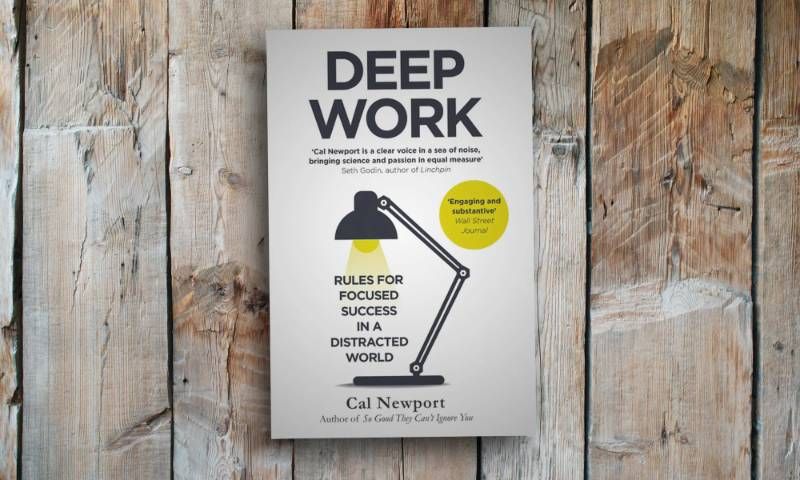
1. Deep Work by Cal Newport
Best for: protecting focused time
Newport distinguishes cognitively demanding, distraction-free work from logistical or routine work. The useful lesson is not that shallow work has no value, but that important work needs time protected from messages and context switching.
Try this: schedule one 45-minute focus block, define a single output before it starts, silence notifications, and record whether you completed that output.

2. Atomic Habits by James Clear
Best for: making a behavior easier to repeat
Atomic Habits focuses on small environmental and behavioral changes that make a habit more obvious, attractive, easy and satisfying. Its compounding examples illustrate the direction of repeated change; they should not be treated as a literal promise of one percent improvement every day.
Try this: shrink a desired behavior to a version you can start in two minutes, attach it to an existing routine, and track completion for seven days.
3. The 4-Hour Workweek by Tim Ferriss
Best for: challenging assumptions about how work is organized
Ferriss presents lifestyle design, selective elimination, automation and experiments with location-independent work. Some examples reflect a particular entrepreneurial context, so treat the book as a source of questions rather than a universal operating manual.
Try this: identify one recurring report or meeting, ask what decision it supports, and shorten, automate or remove it if nobody uses the result.


4. Getting Things Done by David Allen
Best for: capturing and clarifying commitments
Getting Things Done, often called GTD, separates collection from decision-making. Instead of holding reminders in your head, capture them in a trusted inbox, clarify the next action and review the system regularly.
Try this: empty one physical or digital inbox. For every item, decide whether it needs action, identify the next visible step, and place it on the appropriate list.
A note on the two-minute rule
GTD recommends doing an action immediately during processing when it takes less than two minutes. The rule is for clearing small actions while reviewing an inbox, not for interrupting focused work whenever a new request arrives.
5. Mindset by Carol S. Dweck
Best for: responding to learning and setbacks
Mindset is broader than a productivity manual. Dweck contrasts fixed beliefs about ability with a growth-oriented view that skills can be developed. Applied carefully, the idea can help a person treat feedback and difficult practice as information rather than a verdict on talent.
Try this: after one difficult task, write down what failed, what was under your control and the next experiment you will run. Avoid using mindset language to dismiss real constraints or inadequate support.
Turn one book into a seven-day experiment
Pick one idea, define the behavior you will test, choose a visible measure and set a review date. For example: complete four 45-minute focus blocks this week and record the output from each one. A small test produces more useful evidence than collecting notes from five books without changing a routine.
For team experiments, place the outcome in a shared document and assign the next action with an owner and due date. Edworking Docs and Tasks can keep the decision, supporting files and follow-up work in one workspace.
Explore Edworking's task workflow
Frequently asked questions
What is the best productivity book to start with?
Start with the problem that creates the most friction. Deep Work addresses focus, Atomic Habits repetition, GTD task capture, Mindset learning, and The 4-Hour Workweek work design.
Should I read all five books?
No. Read one relevant book and test one idea before adding another system. Combining several methods at once makes it difficult to tell what helped.
Do productivity books work for every profession?
The principles can be adapted, but job control, workload and team expectations vary. A method that assumes control over a calendar may not fit shift work, care work or tightly regulated roles without modification.
How often should I revisit a productivity book?
Return to a book when a specific problem reappears, then review the relevant chapter and run another small experiment. A fixed annual reread is optional, not a requirement.