
 Download Mobile App


File Sharing Without Extra Tools
Upload files into spaces, tasks, chats, and docs. Filter by type or uploader, preview images inline, and reference any file with # from anywhere.
 SC
 ER
 JP
 +2
Display
James ParkSarah Chen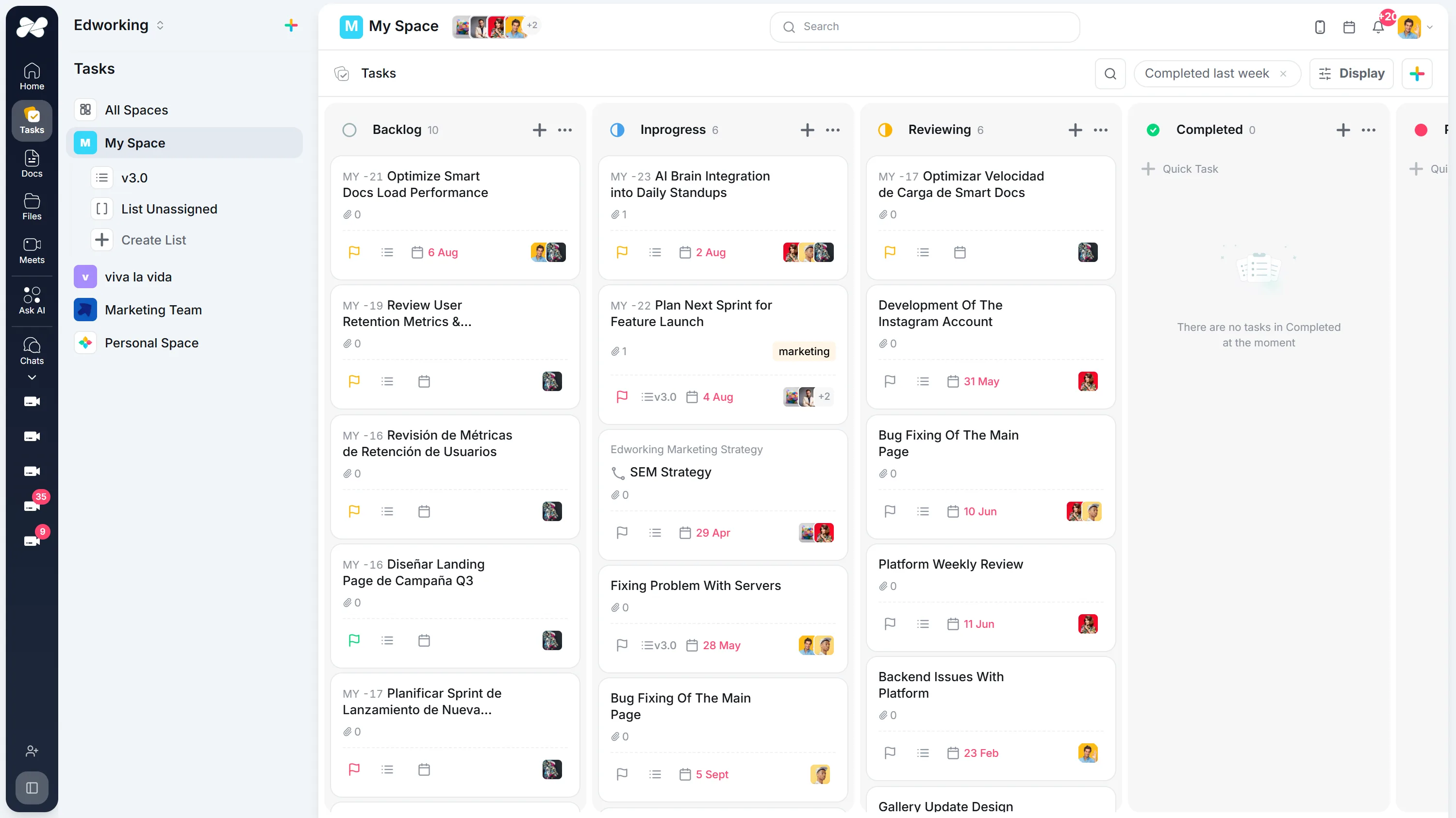 James ParkMarcus ReidSarah Chen
 Nina PatelElena Ruiz
 James Park
 Nina Patel
Every part of file management, shown in the product
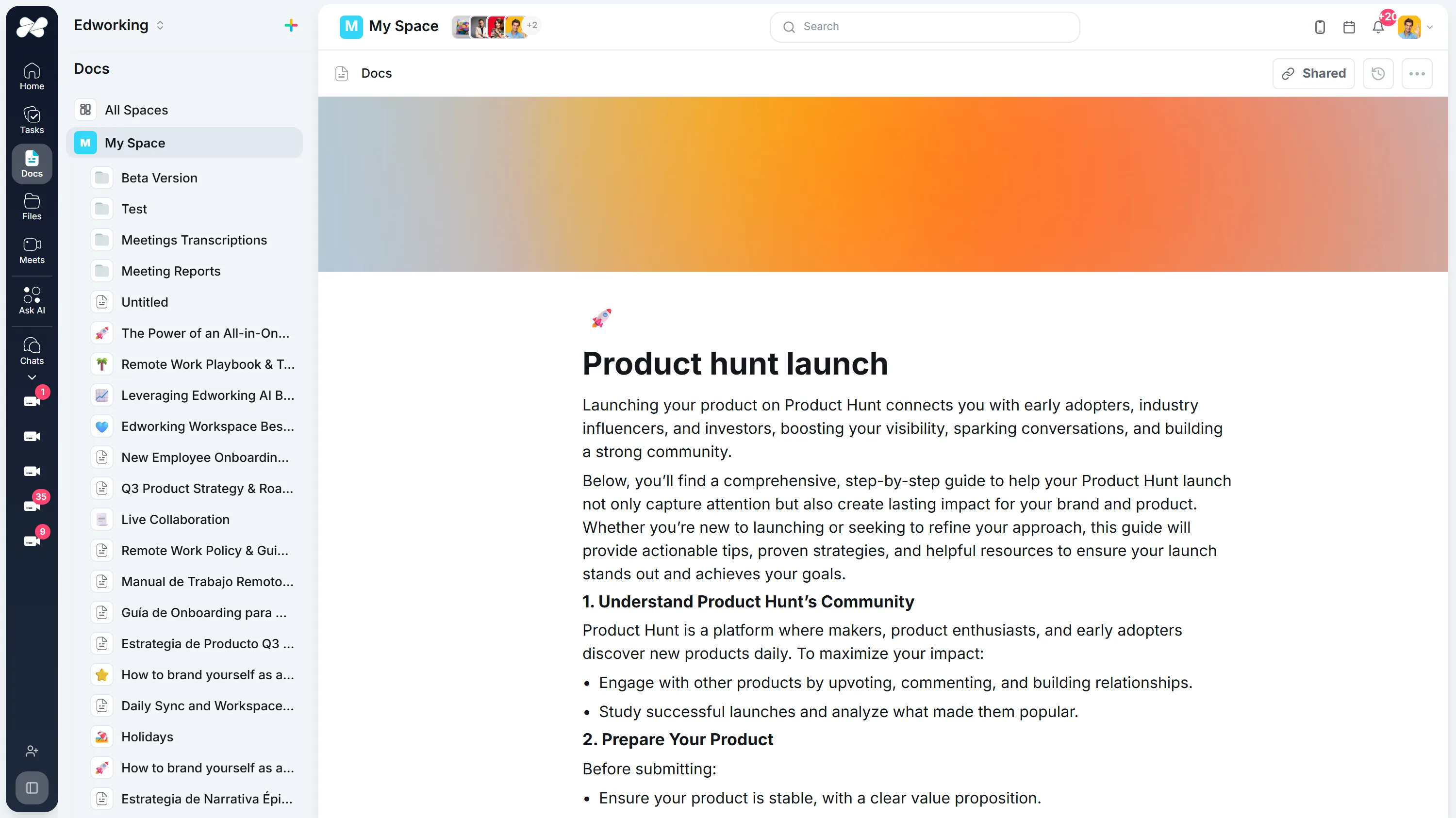
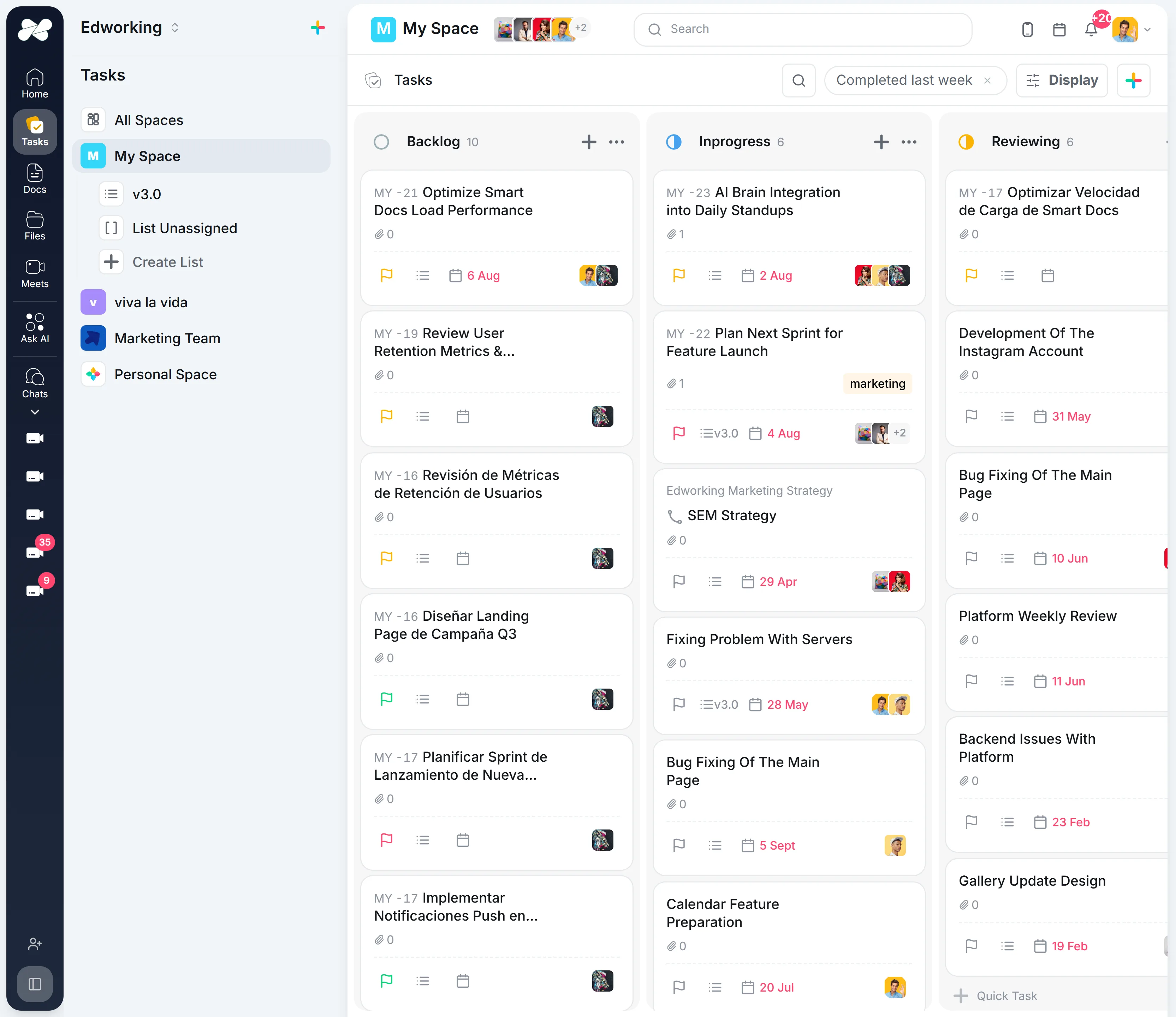
These are the screens your team works in every day. Explore what each one does before you sign up.
UPLOAD AND FOLDERS
Drop a file wherever the work is happening
Upload from a task, a chat, a document, or the files view itself, into folders inside the relevant space. Every file type is supported, and the file lands beside the work that explains why it exists.
NinaMarcusJamesElenaNinaLIST AND BOARD VIEWS
See who shared what, and when
Switch between list and board display, with columns for sharing state, file type, date, and uploader. It answers the question people actually ask, which is who put this here and is it the current version.
 2:14
FILTERS AND ORDERING
Find files without remembering the folder
Filter by file type or by uploader, and order by name, type, upload date, author, or sharing state. Finding last quarter’s deck should not depend on someone having named the folder sensibly.
SarahNinaMarcusJamesElenaNinaREFERENCES WITH #
Point at a file instead of re-uploading it
Type # in a chat, task, or doc to reference a file that already exists. One asset in one place, rather than four copies of the same deck drifting apart in different message threads.
PREVIEWS, ACTIONS AND RECOVERY
Look, share, and undo without downloading
Preview images inline, then rename, duplicate, download, share with a link, or copy a direct link. Anything deleted stays in Recently Deleted for 30 days, so a wrong click is not a lost afternoon.

AI SEARCH INSIDE FILES
Search what the file says, not what it is called
AI search reads content inside PDFs and images as well as tasks, docs, and messages. A clause in a signed contract or a number in a screenshot becomes findable without opening every file in the folder.
VIDEO STORIES
Quick video updates without booking a meeting
Record a short video story to walk through a design, show progress, or leave feedback. Async teams get the context of a call without another entry on everyone’s calendar.
Follow the work
An asset is only useful if you can find it.
Reference the file, search its contents, or leave a video walkthrough. Keep the asset and its context together.
Interactive product preview
Share the original, every time
Example workspace. Explore without creating an account.
1 / 3Teams that brought their work together
Read the original customer stories behind these experiences.
“I left ClickUp to move here because ClickUp wasn't user-friendly for my team. I fully understood the processes, but they didn't. And some of my team members are in the Philippines. So that's why we just shifted to something much easier.”Edworking customer ·
Read the customer’s story →“At the same time it was always a disconnection to communicate with staff and freelancers on Slack while the project tasks were sitting in ClickUp. But we tested it for a month now in our team and everybody is happy! Simpler task setup than ClickUp, better performance and finally projects and messaging in the same app. They even helped us to migrate from ClickUp.”Edworking customer ·
Read the customer’s story →Your next step
Make it work for your team
Explore your options and find the right setup for the way your team works.
All your apps, your AI, and your team in Edworking
Six products that replace your whole stack, and the hundred small things around them.
File sharing FAQ
In folders inside each space, and attached to the tasks, chats, and docs where they were shared. The same file can be referenced from anywhere with #.
Yes. AI search reads content inside PDFs and images, so you can find a file by what it says rather than what it is called.
Deleted files and folders stay in Recently Deleted for 30 days and can be restored from there.
Not today. Edworking is built for active project files, so teams that need version history or retention policies should keep a dedicated storage system for those assets.
You need file version history or a replace-version workflow. You manage a specialist media library or digital asset manager. You require retention policies, expiring links, or governance metadata.