Download Mobile App


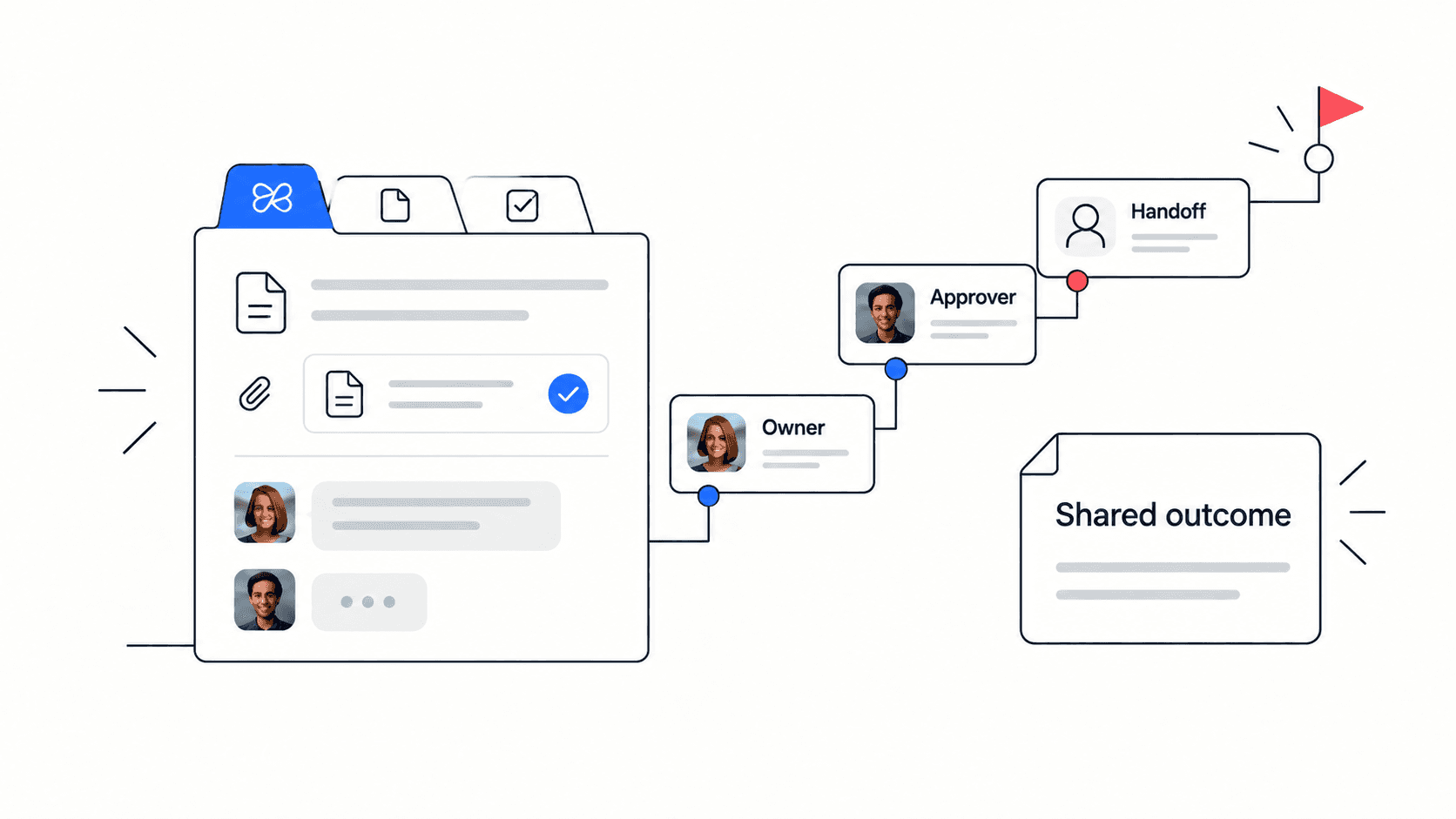
A team dependency map is a simple way to make project handoffs visible before they block delivery. It shows which team, owner, decision, file, or approval another piece of work depends on, then turns vague risk into a follow-up that someone can own.
For small teams and startups, the problem is rarely that people do not care. The problem is that dependencies hide inside chat threads, meeting notes, spreadsheets, and memory. By the time a blocker becomes obvious, the project has already lost time.
Quick takeaway: map dependencies by owner, timing, evidence, impact, and follow-up action. If a dependency has no owner or proof that it is ready, treat it as a project risk, not a planning detail.
Why project handoffs block otherwise healthy teams
Most handoff failures start as small gaps. One team needs design approval before development starts. A customer file must arrive before onboarding can continue. A manager has to confirm scope before the roadmap changes. None of those items look dramatic in isolation, but together they create hidden waiting time.
- The owner is unclear, so everyone assumes someone else is following up.
- The due date exists in a meeting note but not in the task plan.
- The output is named, but the evidence that it is ready is not linked.
- The team knows a dependency is risky, but no one has translated that risk into a next action.
A dependency map prevents those gaps from staying invisible. It gives the team a shared view of what must happen before work can move, who owns it, and where the supporting context lives.
The five fields every dependency map needs
A useful dependency map should be practical enough for weekly planning. It does not need complex formulas or a large template. It needs enough structure to help the team decide what to do next.
- Dependency: the work, decision, file, approval, or input that another task needs.
- Owner: the person or team responsible for making the dependency ready.
- Needed by: the date when the downstream work starts to slow down.
- Proof of readiness: the doc, file, task, decision, or acceptance criteria that confirms the handoff is usable.
- Follow-up action: the next task if the dependency is unclear, late, or risky.
Decision rule: if a dependency cannot be tied to a clear owner and proof of readiness, it should not stay as a note. Turn it into a task with a due date and context.
Use a simple dependency matrix
The fastest way to read a dependency map is to group each item by control and risk. This creates four practical categories the team can act on during planning.
- Internal and ready: your team controls the work and can start now. Keep it visible, but do not overmanage it.
- Internal and blocked: your team owns the work, but scope, files, approvals, or decisions are missing. Assign the missing step.
External and ready: another team provides the input, and the receiving owner has confirmed that it meets the agreed acceptance condition. Link the evidence.
- External and risky: another team owns the dependency and ownership, timing, or acceptance criteria are unclear. Escalate with a specific request.
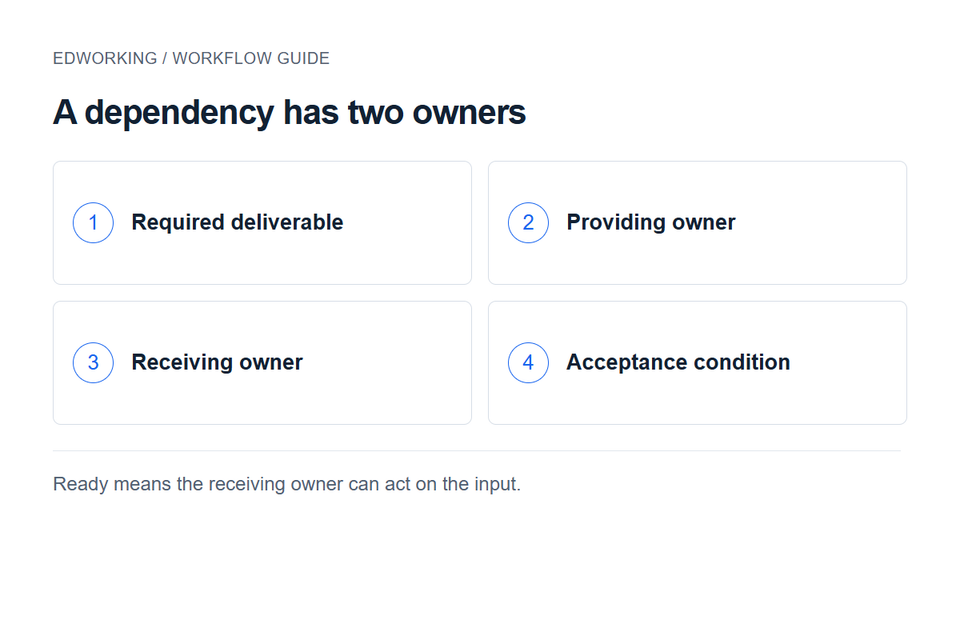
A dependency is ready only when the receiving owner confirms that the required input meets the agreed acceptance condition. An owner and a date make the dependency visible, but do not prove that the input is usable.
How to build the dependency map in one planning session
You can build a useful first version in thirty to forty-five minutes. The goal is not to list every possible relationship in the company. The goal is to expose the handoffs that can slow the current project.
- Start with the project goal and the next delivery milestone.
- List the workstreams that must move before that milestone.
- Ask each owner what they need from another person, team, customer, file, system, or decision.
- Add the needed-by date for each dependency.
- Mark proof of readiness, such as a linked doc, final file, approval note, or task acceptance criteria.
- Label each item as clear, watch, or blocked.
- Convert every watch or blocked item into a follow-up task.
Checklist for reviewing project dependencies
Use this checklist during sprint planning, launch planning, client onboarding, or weekly delivery reviews. It keeps the map focused on action instead of documentation.
- Every dependency has one named owner.
- Every dependency has a needed-by date or decision date.
- Every dependency has proof of readiness or a clear missing artifact.
- Risky dependencies have follow-up tasks, not just comments.
- External dependencies have a communication owner.
- The map is reviewed when scope, capacity, or dates change.
Common mistakes to avoid
The first mistake is treating the map as a static diagram. Dependencies change whenever scope, people, customer feedback, or timing changes. A map that is not reviewed becomes another stale document.
- Do not map every tiny relationship. Focus on handoffs that can block delivery.
- Do not use team names when a person should own the next action.
- Do not rely on meeting memory. Link the doc, file, approval, or task.
- Do not mark a dependency as ready until the downstream team can actually use it.
Mistake to avoid: a green status without evidence. If the dependency is ready, the map should show what proves it is ready.
How Edworking keeps dependency maps connected
A dependency map is most useful when it lives close to the work. Teams using Edworking can keep the map in a shared doc, link each dependency to tasks, attach the files that prove readiness, and discuss blockers in the same workspace.
- Docs keep the dependency map and decision notes visible.
- Tasks assign owners, dates, comments, and status to each risky handoff.
- Files keep supporting artifacts attached to the work instead of scattered across folders.
- Chat and video calls help owners resolve unclear handoffs without losing context.
- Edworking Brain can help teammates find related docs, tasks, and conversations when a dependency changes.
Edworking tip: after the planning session, create one task for each risky dependency and link back to the map. This keeps the project review focused on real blockers rather than repeating the whole discussion.

A practical dependency-map example
Imagine a startup preparing a product launch. Engineering needs final copy from marketing. Marketing needs positioning from the founder. The founder needs customer objections from sales. Customer success needs the support article before the announcement goes out.
- Founder positioning: owner is CEO, needed by Tuesday, proof is approved launch brief.
- Sales objections: owner is sales lead, needed by Monday, proof is a linked demo-notes summary.
- Marketing copy: owner is marketing lead, needed by Wednesday, proof is final page copy in the launch doc.
- Support article: owner is customer success, needed by Thursday, proof is approved help article.
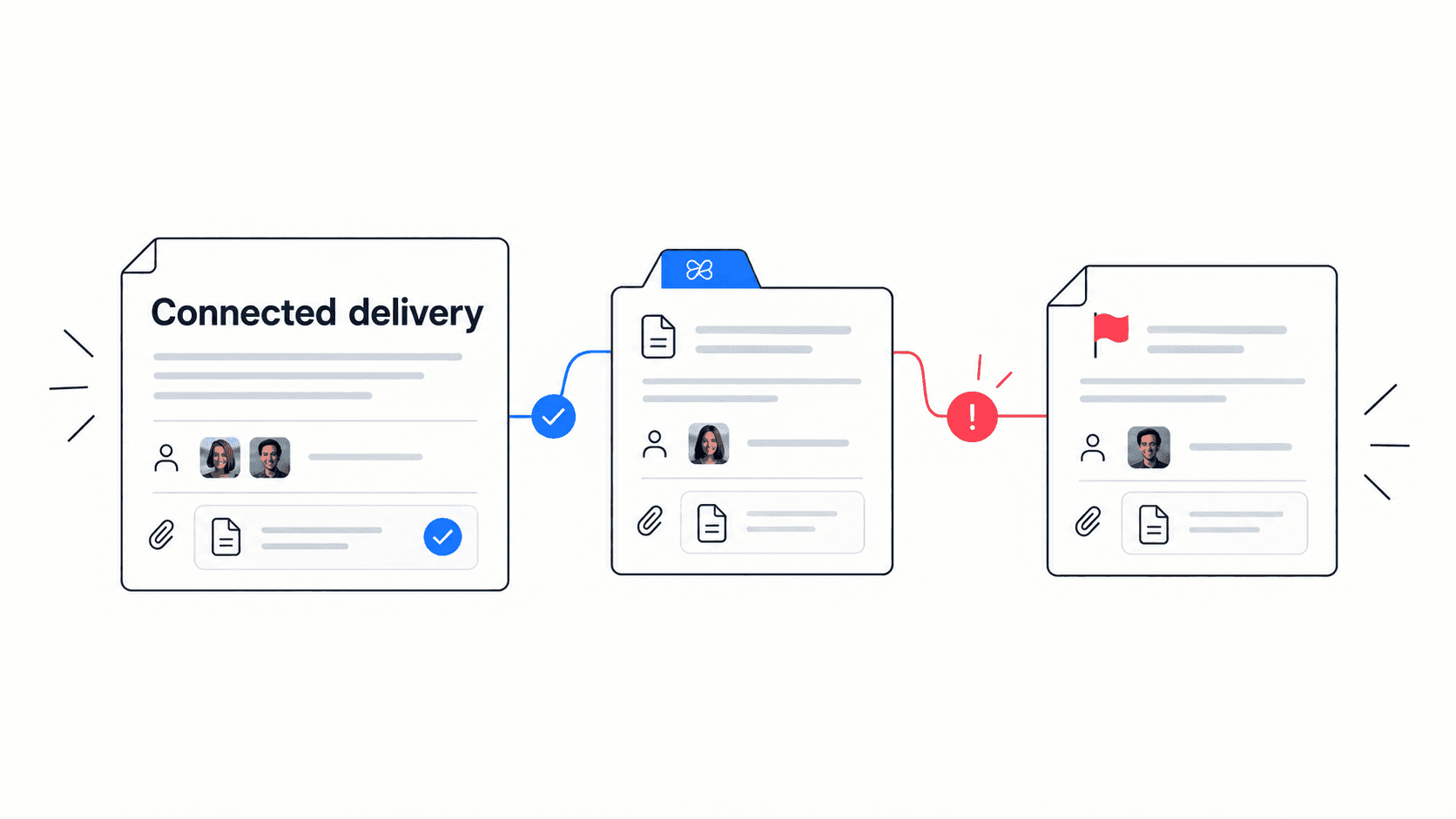
Without a dependency map, that launch looks like four separate updates. With a map, the team can see the chain: sales input unlocks founder positioning, positioning unlocks marketing copy, and marketing copy unlocks support readiness.
When to update the dependency map
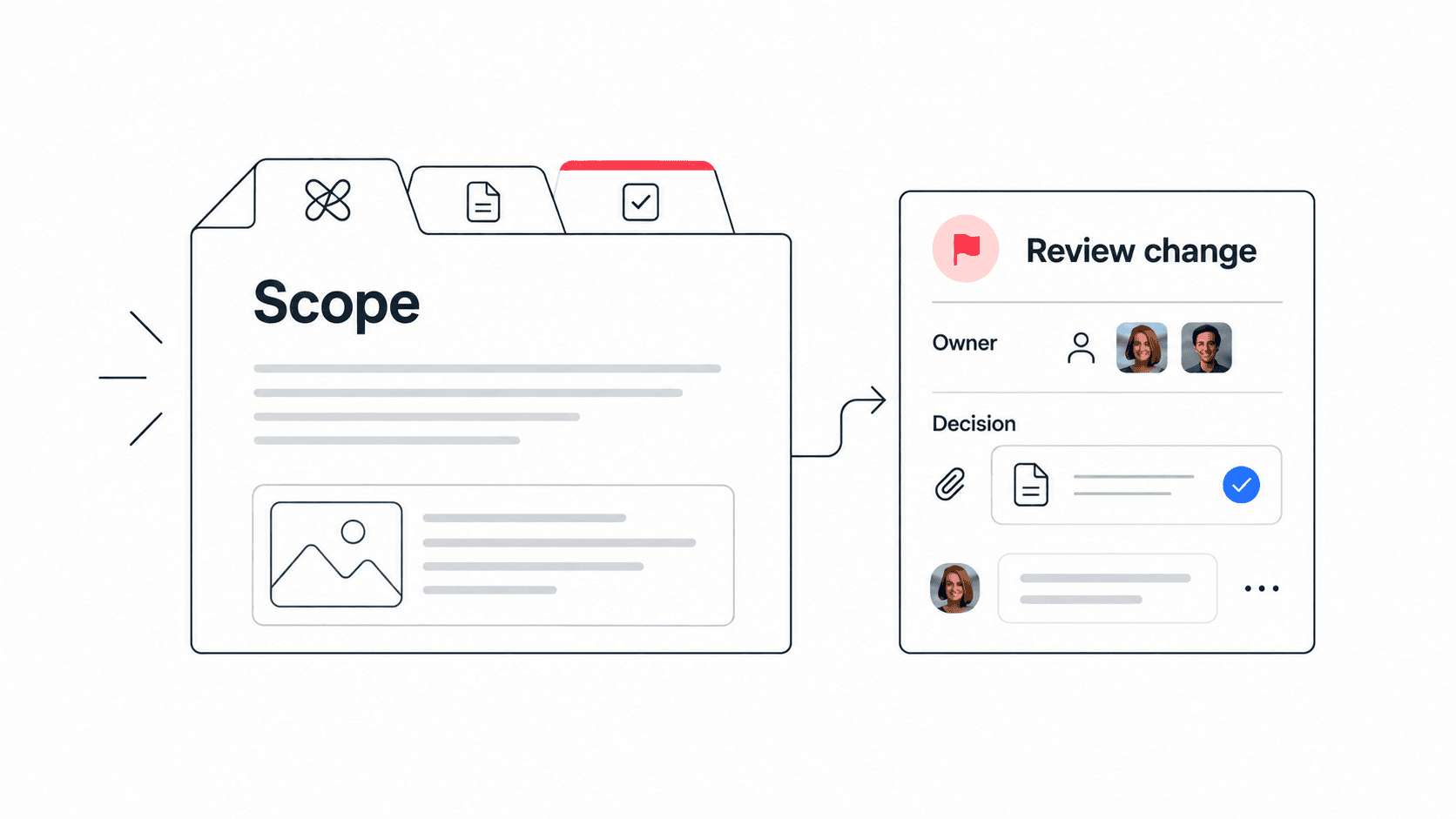
Update the map whenever the work changes enough that a handoff may change. This usually happens after a scope change, customer decision, sprint review, launch delay, resourcing change, or new risk.
- Review weekly for active cross-functional projects.
- Review immediately when a blocked item affects another team.
- Archive old dependency maps after the project closes, but keep the decisions and lessons linked.
A dependency map should make delivery calmer. When owners, dates, evidence, and follow-up tasks are clear, the team spends less time hunting for updates and more time moving the project forward.
How to score dependency risk without overcomplicating it
A dependency map becomes easier to use when each item has a lightweight risk score. Keep the score simple enough that the team can apply it during a live planning conversation. The point is to reveal which handoffs deserve immediate action, not to build a project-management spreadsheet that no one maintains.
- Ownership clarity: score high risk when no single person can confirm the next action.
- Timing pressure: score high risk when the downstream task starts soon or has no buffer.
- Evidence quality: score high risk when readiness is described verbally but not linked to a file, doc, task, or approval.
- Impact: score high risk when one delay blocks several teams, a customer commitment, or a launch date.
Decision rule: if a dependency has weak ownership and weak evidence, treat it as blocked even when the due date still looks far away.
A small score can be as simple as low, medium, and high. Low-risk dependencies stay in the map. Medium-risk dependencies get a review date. High-risk dependencies get a follow-up task, an owner, and a specific request for what proof is needed.
How managers should run a dependency review
A good dependency review is short and specific. The facilitator should not ask for broad status updates from every person. Instead, review the risky dependencies first, confirm what changed since the last review, and close each conversation with one next action.
- Open with the high-risk items, not the full project plan.
- Ask what changed: owner, date, scope, evidence, or impact.
- Confirm whether the downstream team can start work with the current output.
- If the answer is no, create or update a task before the meeting ends.
- Close by naming which dependency can be removed from the map because it is now complete.
Example review: the design handoff is due Thursday, but the support article now needs screenshots from the final interface. The team updates the dependency impact, assigns a screenshot task to design, links the task to the support doc, and moves the handoff from watch to blocked until the screenshot is attached.
What to include in the first version of your map
The first version should be deliberately small. If you try to capture every relationship, the map becomes too slow to maintain. Start with the next milestone, the teams involved, and the five to fifteen handoffs that could realistically stop progress.
- Project milestone: what delivery moment the map protects.
- Workstream: the part of the project affected by the dependency.
- Dependency owner: the person accountable for the handoff.
- Downstream owner: the person or team waiting for the handoff.
- Readiness proof: the linked artifact that makes the handoff usable.
- Next review date: when the team will re-check risk.
This structure is enough for a startup launch, a client onboarding project, a product sprint, or a cross-functional operations change. The team can add detail later if the project grows, but the first benefit should be immediate visibility.
How dependency mapping supports async teams
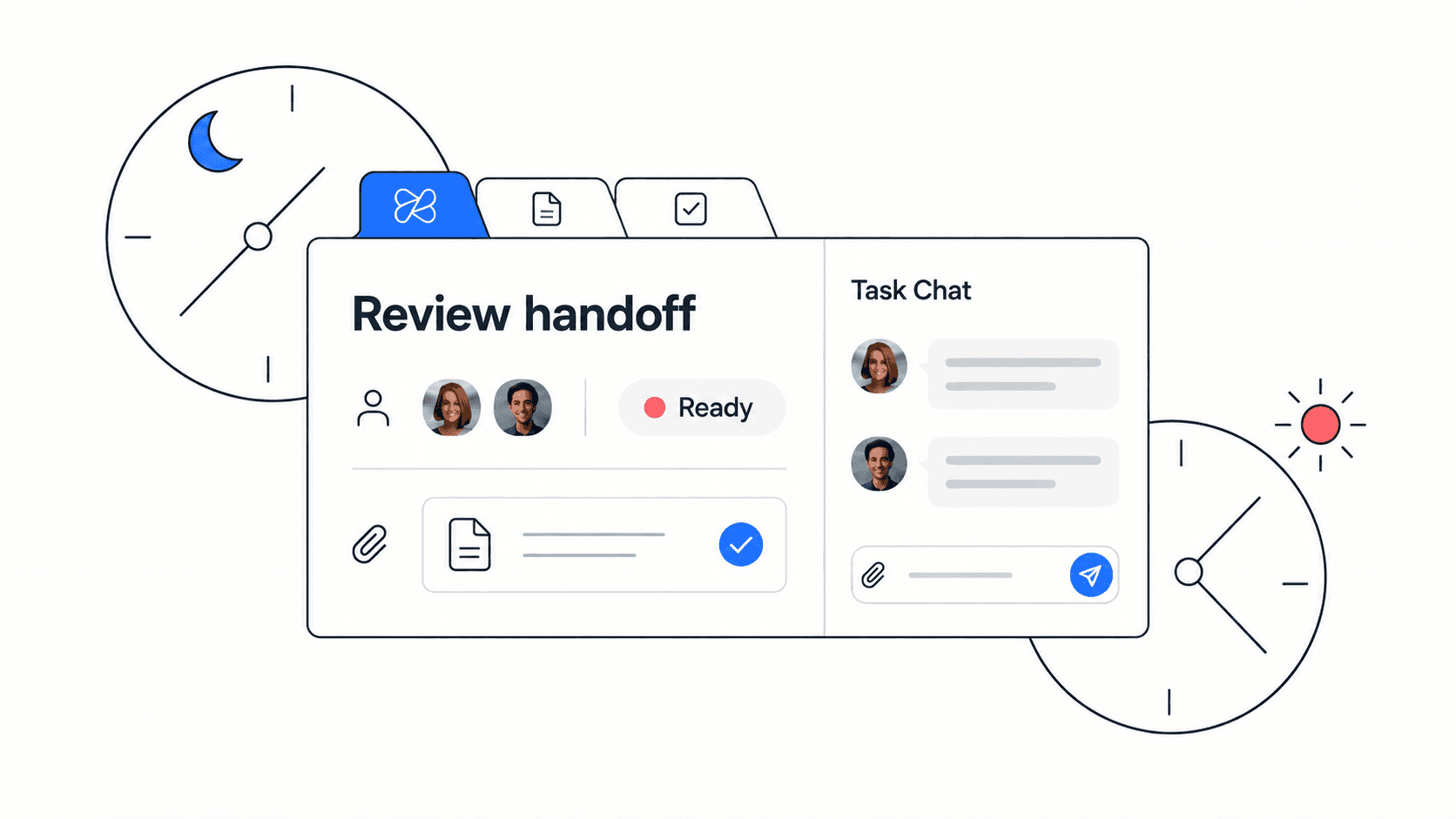
Async teams need dependency maps because the person with the answer may not be online when another teammate gets blocked. A clear map lets someone see the owner, context, and next step without waiting for a live meeting or searching multiple apps.
- The map reduces repeated status questions because the latest owner and proof are linked.
- It improves handoff quality because each dependency says what ready means.
- It gives managers a cleaner escalation path when a blocker affects a milestone.
- It helps new teammates understand why one task matters to another task.
For distributed teams, the dependency map should live next to tasks and documents, not in a private planning file. When the map is visible, teammates can update context as work changes and avoid turning every uncertainty into a meeting.
Confirm acceptance before marking a dependency ready
In a fictional launch, support depends on an approved product description before publishing a help article. The dependency owner provides the description and evidence of approval. The support owner checks that the description answers the required questions and confirms acceptance. Until then, the input is delivered but not necessarily ready to use.
Use the async handoff guide to structure that exchange. If the input changes the release decision, link the decision log. Keep each dependency attached to the milestone it affects so the team can see the consequence of a delay.